Living on the Edge: How a Texas Barista Stretches Her Insulin to Stay Alive Between Jobs
⚠️ Truyện hư cấu phục vụ giải trí. Nhân vật & tình tiết là sản phẩm tưởng tượng.
The alarm on Elena Rodriguez’s phone does not sound like a gentle chime designed to coax a person awake into a peaceful morning. It is a harsh, repetitive digital shriek, set to maximum volume, because Elena knows that sleeping through it could mean slipping into a coma from which she might not wake. It is four-forty-five in the morning in a cramped, second-floor apartment in East Austin, Texas, and the first thing she does before her feet even touch the cold linoleum floor is reach for her smartphone to check her continuous glucose monitor app. The screen glows in the dim pre-dawn gloom, flashing a bright, accusing amber number: two hundred and forty-two milligrams per deciliter, with an arrow pointing sharply upward. She closed her eyes last night with her blood sugar hovering safely at one hundred and twenty, having eaten a meager dinner of plain white rice and scrambled eggs, carefully measured to require the absolute minimum dose of rapid-acting insulin. Yet, despite her caution, her liver has dumped glucose into her bloodstream overnight, a phenomenon she has learned to anticipate but can rarely control without the precise pharmacological tools she lacks.
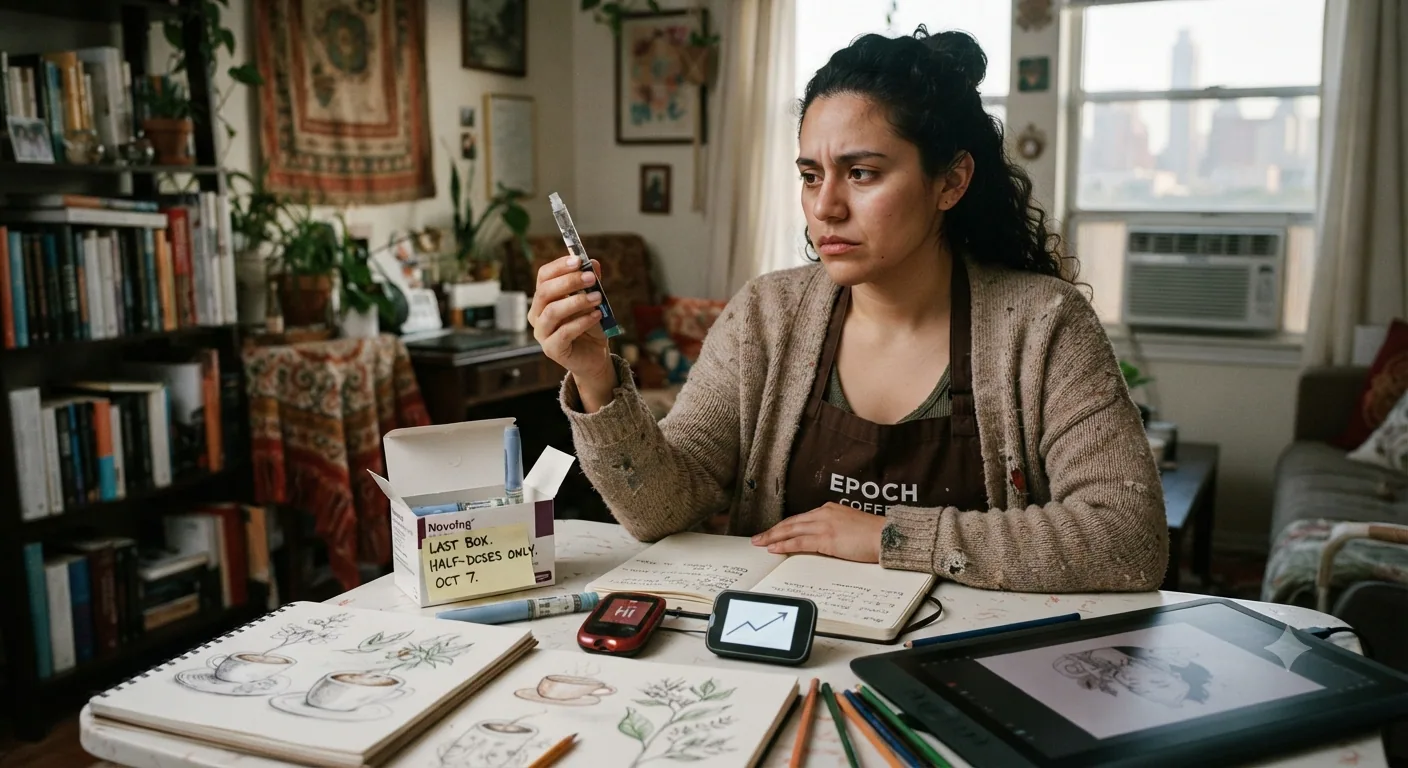
Elena is twenty-seven years old, an independent barista who pulls espresso shots five days a week at a bustling café on East Sixth Street and spends her late nights hunched over a drawing tablet, freelancing digital illustrations for independent board game publishers and local punk bands. By all outward appearances, she is a vibrant, creative young woman carving out a colorful life in Austin's booming cultural hub. But behind the laughter shared with customers and the intricate vector art glowing on her monitor lies a grinding, terrifying calculation that consumes her every waking hour. She has lived with Type One Diabetes since she was nine years old, an unwelcome companion that arrived with a sudden, devastating weight loss and a three-week stay in the pediatric intensive care unit. For nearly two decades, her survival was subsidized and protected by her parents' robust corporate health insurance policy, a safety net that absorbed the exorbitant costs of insulin vials, infusion sets, continuous glucose monitor sensors, and blood glucose test strips.
That safety net vanished on her twenty-seventh birthday, catapulting her directly into the punishing reality of the American healthcare landscape for gig workers and the uninsured. She earns roughly thirty-two thousand dollars a year through a patchwork of hourly wages and sporadic freelance commissions. This puts her squarely in the cruelest crevice of the modern social contract: she earns too much to qualify for Medicaid in the state of Texas, which has stubbornly refused to expand the program under the Affordable Care Act, yet she earns far too little to afford the monthly premiums and deductibles of private health insurance. A silver-tier ACA plan on the marketplace would cost her six hundred dollars a month—nearly half of her monthly rent—with a deductible exceeding seven thousand dollars before the insurance company pays a single penny for prescriptions. Faced with the choice between paying her landlord or paying an insurance conglomerate, Elena chose a third, desperate option: she dropped coverage entirely and stepped out onto the high wire without a net.
The core of her daily survival strategy rests on a practice that medical professionals speak of in hushed, terrified tones, but which thousands of uninsured Americans perform in the privacy of their bathrooms every single day: insulin rationing. A single box of three rapid-acting insulin pens, which contains a total of nine milliliters of the hormone she needs every time she eats, carries an out-of-pocket cash price of roughly three hundred and fifty dollars at a standard retail pharmacy. A full month’s supply for her physiological needs usually requires two boxes, pushing the monthly cost to seven hundred dollars, before even factoring in long-acting basal insulin, needles, alcohol swabs, or continuous glucose monitor sensors that cost an additional three hundred dollars a month. Because spending one thousand dollars a month on medical supplies is a mathematical impossibility on her income, Elena has taught herself how to stretch a thirty-day supply across sixty, sometimes seventy days.
She stands in her narrow kitchen, unscrewing the cap of a plastic-encased insulin pen that she retrieved from the back of her small refrigerator. This pen is supposed to be discarded after five uses or when empty, but Elena has been nursing this specific pen for nearly four weeks, keeping it cool in a silicone travel pouch. She dials the dosage ring down, deliberately halving the amount of insulin her endocrinologist prescribed for a morning meal containing forty grams of carbohydrates. Her body needs eight units to safely process the oatmeal she is about to prepare, but she dials it to four. Four units is not enough to bring her blood sugar down to a normal range, but it is just enough to keep her out of immediate, catastrophic danger, staving off the terrifying onset of Diabetic Ketoacidosis, or DKA, for another twenty-four hours. It is a biological tightrope walk where every single meal is a gamble, and the house always wins.
The absurdity of her predicament is rooted in the labyrinthine supply chain of the American pharmaceutical industry, a complex web of middlemen, manufacturers, and financial incentives that defies common sense. When insulin was discovered a century ago, its inventors sold the patent for a single dollar so that it would forever remain affordable and accessible to the public. Yet today, modern analog insulins—genetically engineered proteins that mimic the human body's natural insulin response with precision—are protected by a dense thicket of ever-evolving patents, allowing pharmaceutical manufacturers to raise list prices by over one thousand percent over the past two decades. At the center of this pricing inflation are Pharmacy Benefit Managers, or PBMs, the powerful corporate intermediaries that negotiate drug formularies between insurance companies and drugmakers. In a system driven by perverse incentives, PBMs demand large rebates and discounts from manufacturers in exchange for placing a particular brand of insulin on their preferred drug lists. The higher the list price of the insulin, the larger the potential rebate pool, creating a system where artificially inflated prices benefit everyone in the corporate chain except the actual human being injecting the medicine into their flesh.
State-level legislative efforts to address this crisis have offered flashy headlines but precious little relief for people in Elena’s exact position. Across more than twenty states, lawmakers have passed legislation capping out-of-pocket insulin costs at thirty-five dollars for a thirty-day supply. While these caps have been celebrated as major legislative victories, they come with a catastrophic structural flaw: they only apply to individuals who are enrolled in state-regulated health insurance plans. If an uninsured worker walks up to a pharmacy counter in Texas, the state-mandated cap evaporates into thin air, leaving them entirely at the mercy of cash prices. Furthermore, federally regulated self-funded employer plans are exempt from state insurance mandates, meaning millions of workers find themselves locked out of the savings. For Elena, the thirty-five-dollar insulin cap is nothing more than a cruel tease, a policy written for people who already have the privilege of formal health insurance, while the uninsured are left to navigate the desert alone.
As the morning progresses, the effects of her calculated under-dosing begin to ripple through her system. By mid-afternoon, as she stands behind the espresso machine wiping down stainless steel steam wands and calling out orders to a line of impatient remote workers, a familiar, ominous haze begins to settle over her consciousness. Her vision blurs slightly at the edges, transforming the bright neon menu boards on the café wall into smeared washes of color. A deep, profound nausea coils in the pit of her stomach, making the rich aroma of roasted coffee beans smell less like comfort and more like a nauseating chemical solvent. She feels an overwhelming, bone-deep fatigue that has nothing to do with standing on her feet for six hours and everything to do with her cells starving for glucose while excess sugar circulates uselessly in her bloodstream.
Her smartwatch vibrates insistently, signaling that her continuous glucose monitor reading has crossed three hundred milligrams per deciliter and continues to climb. In the quiet, private panic of the stockroom during her ten-minute break, Elena leans against a cardboard box of paper coffee cups and confronts the terrifying calculus that haunts every uninsured diabetic in America. She knows the clinical warning signs by heart: if her blood sugar stays this high for too long, her blood will begin to turn acidic as her body breaks down its own fat stores for energy, producing toxic ketones that poison her organs. This is the slippery slope toward Diabetic Ketoacidosis, a medical emergency that involves agonizing abdominal pain, vomiting, confusion, rapid breathing, and, if left untreated, cerebral edema, coma, and death.
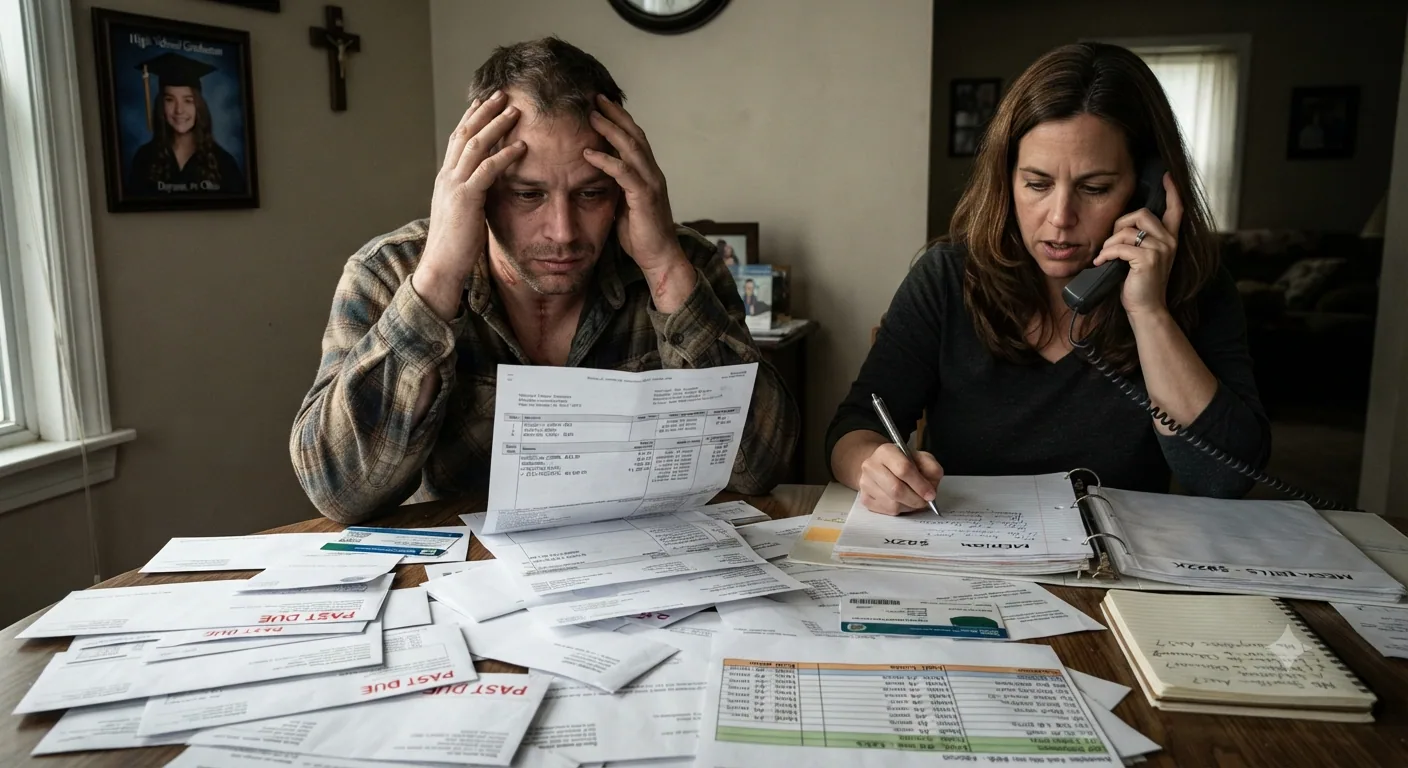
She pulls out her phone and searches her banking app. Her checking account balance sits at one hundred and forty-two dollars. Rent is due in twelve days. If she collapses behind the counter and an ambulance is called, the subsequent emergency room visit will generate a bill totaling tens of thousands of dollars, completely obliterating what little credit she has spent years building, and plunging her into a cycle of medical debt from which she may never escape. She remembers an acquaintance from a local art collective who spent three days in an ICU with DKA last year and received a bill for forty-two thousand dollars, even after negotiating a partial hardship reduction. For a gig worker with no health insurance, a single trip to the emergency room is not just a healthcare event; it is a financial execution.
Desperate to avoid the hospital, Elena considers the traditional, older-generation insulins available over the counter at major pharmacies like Walmart without a prescription. These older formulations, known as Regular and NPH insulin, have been around for decades and cost roughly twenty-five dollars a vial. But using them safely requires a rigid, clockwork lifestyle that is utterly incompatible with the chaotic, unpredictable schedule of a modern gig worker. Unlike modern analog insulins that act within minutes and fade predictably, older insulins have a delayed peak action time that can trigger sudden, catastrophic hypoglycemia hours after injection if a meal is delayed by even fifteen minutes. Taking NPH insulin without precise, continuous medical supervision is widely considered by endocrinologists to be playing Russian roulette with your endocrine system. Yet, as Elena stands in the stockroom fighting back a wave of dizziness, she seriously weighs whether she has any other choice.
Unable to afford retail prices and terrified of older insulins, Elena turns to a phenomenon that has emerged quietly in the digital shadows of the modern healthcare crisis: the underground peer-to-peer safety net. On encrypted messaging apps, closed social media groups, and community forums dedicated to chronic illness solidarity, thousands of Americans engage in what can only be described as a modern mutual aid underground railroad. Diabetics who have recently changed insurance plans, individuals whose loved ones have passed away leaving behind surplus medication, and people who have managed to secure extra supplies through various bureaucratic workarounds quietly coordinate shipments of life-saving goods to strangers across state lines.
Elena opens a private messaging channel on her phone where she has b