Killing the Clock: How Generative AI Is Forcing Wall Street Law Firms to Rethink the Billable Hour

⚠️ Truyện hư cấu phục vụ giải trí. Nhân vật & tình tiết là sản phẩm tưởng tượng.
For over a century, the foundational economic engine of large law firms has been remarkably simple, highly lucrative, and fundamentally flawed. It is called the billable hour. In this traditional model, clients pay for time rather than value. Lawyers sell minutes, and the more hours spent drafting a brief, reviewing a document room, or conducting case law research, the higher the revenue for the firm. But this century-old economic certainty is currently facing an existential threat that is shaking the foundations of the Am Law one hundred. Generative artificial intelligence, advanced legal technology, and modern automated agents are dismantling the billable hour, forcing elite Wall Street law firms to completely rethink their operational models, compensation structures, and training pipelines.
To understand why this disruption is so profound, we must look at how large law firms have historically made their money. The traditional associate leverage model relied on a vast army of junior associates who spent countless hours performing routine, repetitive tasks. First-year and second-year lawyers would spend days or even weeks reviewing thousands of corporate emails during e-discovery, cross-referencing contract clauses, or pulling historical case citations for a motion. Every single one of those hours was billed to the corporate client at a steep hourly rate. Under this framework, inefficiency was paradoxically profitable. If a task took ten hours instead of two, the firm billed for ten hours, and the client paid.
That era of high-billing inefficiency is coming to a rapid and unceremonious end. Today, generative artificial intelligence tools and specialized legal agents can ingest thousands of pages of complex corporate documents, synthesize disparate contract clauses, and draft comprehensive legal research memos in a matter of minutes. Tasks that once required a team of junior associates working late into the night can now be executed almost instantaneously with a high degree of precision. What used to take days now takes minutes, and this massive compression of time represents a direct assault on the gross billings of traditional law firms.
When technology slashes the time required to complete a project from fifty hours to two hours, the firm faces an immediate financial dilemma. If they continue to bill by the hour, their total revenue plummets. If a corporate client receives a bill for two hours of work on a task they used to pay fifty hours for, the firm’s incoming cash flow shrinks dramatically, even if the quality of the work is identical or superior. This creates a severe tension between technological efficiency and firm profitability, forcing leaders across the legal industry to confront a reality where doing work faster actually earns them less money under legacy pricing models.
Corporate general counsels, who manage the legal budgets for major Fortune five hundred companies, are accelerating this shift. For years, corporate clients have expressed frustration with paying exorbitant hourly rates for entry-level routine tasks performed by junior associates who are still learning the ropes. Now, armed with the knowledge of what modern artificial intelligence can accomplish, general counsels are pushing back aggressively. They are demanding radical transparency in billing, refusing to pay for hours that could have been automated, and shifting their legal spend toward firms that offer predictable, efficient pricing models.
This growing pressure from corporate clients has triggered a structural evolution across the legal landscape. Am Law one hundred firms are increasingly moving away from pure hourly billing and adopting alternative fee arrangements, fixed-fee structures, and value-based pricing. Instead of charging clients by the clock, firms are charging a flat fee for specific outcomes, such as completing an M and A due diligence review or structuring a standard debt financing agreement. Under a value-based pricing model, the firm is rewarded for efficiency rather than penalized by it. If a law firm can use advanced artificial intelligence to complete a complex corporate transaction in a fraction of the usual time, they can still charge a high flat fee based on the immense value and risk mitigation provided to the client, while enjoying vastly higher profit margins because their labor costs are drastically reduced.
However, this transition to an automated, efficiency-driven model is not without severe operational challenges and internal contradictions. One of the most critical casualties of the automated legal workflow is the traditional apprenticeship pipeline. Historically, spending grueling hours reviewing documents and conducting exhaustive legal research was how junior associates learned the craft of lawyering. It was in the trenches of document discovery that young lawyers developed an intuitive understanding of contract nuance, risk assessment, and analytical rigor.
When artificial intelligence absorbs these entry-level tasks, law firms face a looming training deficit. If junior associates no longer spend their first three years reviewing documents and synthesizing case law, how do they develop the deep competence required to become senior partners who can argue before appellate courts or advise boards of directors on high-stakes litigation? Law firms are currently scrambling to redesign their training programs, creating simulated exercises, mentorship initiatives, and advanced oversight protocols to ensure that the next generation of lawyers still develops the critical thinking skills necessary to practice at the highest levels of the profession.
Compounding this training crisis is the issue of associate attrition and morale. The traditional path to partnership was grueling, but it promised substantial financial rewards at the end of the tunnel. As artificial intelligence changes the daily work experience of junior lawyers, firms are seeing shifts in expectations regarding workload, career progression, and compensation. Associates who expected to spend their formative years mastering technical research are now finding themselves acting more as prompt engineers and quality assurance editors for software outputs. This alters the psychological contract between the young lawyer and the mega-firm, forcing management to rethink how they evaluate performance, distribute bonuses, and retain top-tier legal talent.
Beyond economics and training, the integration of generative artificial intelligence into high-stakes legal practice introduces significant professional liability and ethical hurdles. The legal profession is governed by strict rules of professional conduct, chief among them being the duty of competence and the duty of diligence. Lawyers are ethically bound to provide competent representation, which increasingly includes understanding the capabilities and limitations of the technology they use in their practice.
One of the most persistent technical challenges associated with generative artificial intelligence is the phenomenon of hallucination, where a system confidently generates plausible-sounding but entirely fabricated case citations, legal arguments, or statutory interpretations. Over the past few years, federal and state courts have penalized attorneys who submitted briefs containing fake citations generated by artificial intelligence tools without proper human verification. State bar associations across the country have issued formal ethics opinions emphasizing that while lawyers are encouraged to leverage technology to improve efficiency, the ultimate responsibility for the accuracy of any legal filing rests squarely on the human attorney of record.
This reality means that artificial intelligence does not eliminate the need for human oversight; rather, it shifts the nature of human labor from creation to verification. The lawyer's job is no longer just to write the brief from scratch, but to meticulously audit, fact-check, and refine the output generated by the machine. This requires a different set of skills—skills centered on critical evaluation, algorithmic literacy, and rigorous quality control. Failing to exercise this diligence can lead to catastrophic consequences, ranging from severe judicial sanctions and professional malpractice claims to devastating reputational damage for both the individual attorney and the firm.
Malpractice liabilities in the age of automated law extend beyond simple citation errors. Cybersecurity and confidentiality are paramount concerns when dealing with sensitive corporate secrets, proprietary intellectual property, and privileged client communications. Feeding confidential corporate data into public or insufficiently secure artificial intelligence models can breach attorney-client privilege and expose firms to massive data breaches or intellectual property leaks. Consequently, elite law firms are pouring millions of dollars into secure, enterprise-grade, closed-loop legal tech ecosystems that protect client confidentiality while maximizing the computational power of modern algorithms.
As we look toward the future of the legal industry, it is clear that the billable hour will not disappear overnight. For certain types of bespoke, highly contentious, and unpredictable litigation, tracking time remains a logical way to account for endless variables. However, the monopoly of the billable hour is officially broken. The firms that will dominate the next century of legal practice are those that successfully decouple revenue from raw time spent, embracing technology not as a threat to their business model, but as the core driver of a more profitable, scalable, and value-driven enterprise. The clock is finally running out on the billable hour, and the legal profession is stepping into a bold, automated, and fundamentally transformed future.
Bài viết liên quan
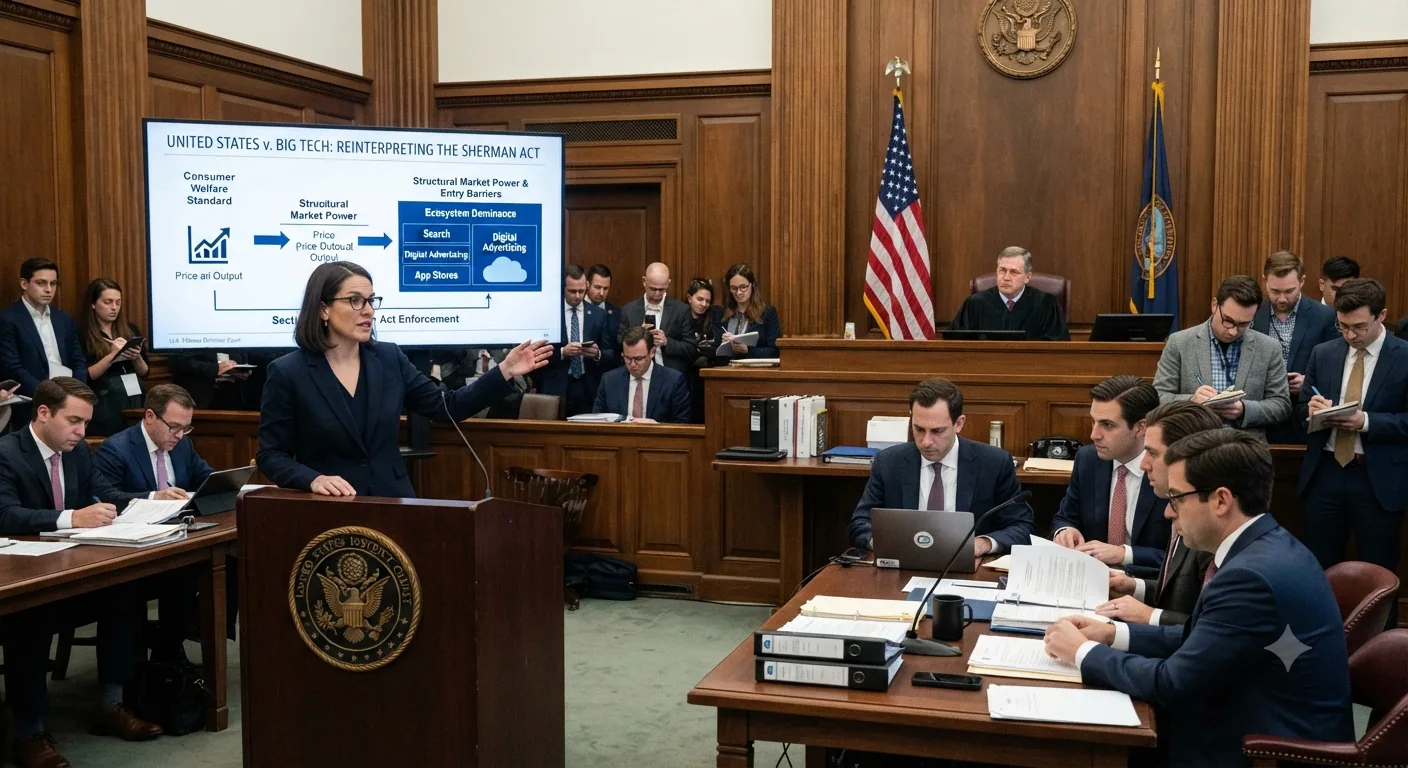
Monopoly on Trial: How Antitrust Enforcement is Redefining Corporate Power

Investing in the Verdict: Inside the Multi-Billion Dollar Shadow Economy of Litigation Finance

Harvest of Glass: The Bitter Civil War Splitting Midwestern Farming Towns Over Solar Leases